

Middle of the funnel (MOFU) marketing is the content that helps buyers who already know their problem compare options and build a shortlist. It's the consideration stage, where B2B companies win or lose a lot of deals before sales ever gets a call.
That shortlist used to come together across Google results, review sites, and a few vendor websites. Now a growing share of it happens inside ChatGPT, Gemini, and Google's AI Overviews. In G2's 2025 Buyer Behavior Report, generative AI chatbots were the top source influencing vendor shortlists, ahead of software review sites (G2).
So MOFU content now has two jobs. It has to help a human evaluate you, and it has to give AI tools something clear enough to cite. This guide covers both: what MOFU marketing is, the content types that work at this stage, how to make them show up in AI answers, and how to measure the results.
Key takeaways
- Middle of the funnel marketing helps problem-aware buyers compare options and build a shortlist. The goal is consideration, not a closed deal.
- Buyers now build shortlists inside AI answers. G2's 2025 survey of 1,169 B2B buyers found generative AI chatbots were the top source influencing vendor shortlists.
- At the evaluation stage, 88% of AI citations go to content brands control, based on Ten Speed's 2026 analysis of 7,387 citations. Product pages, comparison pages, and listicles lead.
- The MOFU formats that work hardest are comparison guides, listicles, case studies, implementation guides, and interactive tools.
- MOFU content that gets cited answers the question in the first sentence, uses plain category language, and says exactly who each option is best for.
- Measure MOFU by progression and AI visibility (MQL to SQL rate, sales cycle length, AI share of voice, LLM referral conversions), not page views.

What is middle of the funnel marketing?
Middle of the funnel marketing targets buyers who understand their problem and are actively evaluating solutions, but haven't picked one yet. It connects awareness content at the top of the funnel to the decision content at the bottom.
Think of it as the research and compare phase. A MOFU buyer is asking "what are my options?" and "which of these fits a company like mine?" They want specifics: how approaches differ, what implementation looks like, and proof that a solution worked for someone similar.
MOFU buyers tend to share four traits:
- They research actively. They search, prompt AI tools, and read several sources about solutions like yours.
- They ask specific questions. Features, integrations, implementation time, cost, and results.
- They compare. They're weighing several vendors or approaches at once, often side by side.
- They involve others. B2B purchases usually pull in a buying committee, so MOFU content has to work for more than one reader.
MOFU content makes a buyer comfortable enough to put you on the shortlist, so your bottom of the funnel content can close the deal.
For more on how buyers research on their own before sales gets involved, listen to our conversation with Pius Chan of Lumen5.
How MOFU differs from TOFU and BOFU
Each funnel stage answers a different buyer question, so each needs different content and a different success metric.
| Stage | Buyer question | Content they want | Your goal | Common mistake |
|---|---|---|---|---|
| Top of funnel (TOFU) | "I have a problem. What is it?" | Educational explainers, broad guides, data and trends | Get found and build awareness | Pushing the product too early |
| Middle of funnel (MOFU) | "What are my options?" | Comparison guides, listicles, case studies, implementation guides, interactive tools | Earn a spot on the shortlist | Staying too vague to help a real evaluation |
| Bottom of funnel (BOFU) | "Is this the right choice?" | Product pages, pricing, vs. pages, demos, ROI proof | Win the decision | Not making the case for your specific solution |
Top of funnel content covers the problem. Middle of funnel content covers the ways to solve it and who each way fits. Bottom of funnel content covers why your solution is the one to buy.
The stages also overlap more than the diagram suggests. A single AI prompt like "best project management tool for a 50-person agency" can take a buyer from problem-aware to shortlist in one answer. That's why MOFU pages need to stand on their own and give enough context for a reader who skipped the top of the funnel entirely.
For the stages on either side of this one, see our guides to top of the funnel marketing and bottom of the funnel content, or the full content marketing funnel.
Why middle of the funnel marketing matters more in AI search
MOFU has always been where buyers do their homework. What changed is where that homework happens and who does the first round of filtering.
Buyers are building shortlists with AI. In G2's 2025 Buyer Behavior Report, 79% of B2B buyers said AI search has changed how they research, and generative AI chatbots were the top source influencing vendor shortlists (G2). Responsive's 2025 buyer study found nearly two-thirds of B2B buyers use generative AI as much as or more than traditional search when researching vendors (Responsive).
Sales gets involved later. G2 also found nearly two out of three buyers prefer to engage vendor salespeople only in the later stages of their journey, up 17 points from 2024. By the time a buyer talks to you, MOFU content has already done most of the persuading.
AI cites the content you control. We analyzed 7,387 AI citations across B2B evaluation-stage prompts, the "best X for Y" and "X vs. Y" questions buyers ask mid-funnel. 88% of citations went to content brands produce and control. Community sources like Reddit, YouTube, and forums earned about 4% (Ten Speed citation study).

| Page type | Share of evaluation-stage AI citations |
|---|---|
| Product pages | 24.1% |
| Articles (blog, news, PR) | 17.4% |
| Comparison pages | 13.3% |
| Listicles | 13.2% |
| Homepages | 7.8% |
| Third-party profiles (G2, Capterra) | 7.2% |
| Community sources (Reddit, YouTube, forums) | 4.2% |
Comparison pages and listicles together earned more than a quarter of citations. And comparison prompts made up 20% of the prompts we tracked but drove 27% of citations. The questions buyers ask mid-funnel are exactly the ones AI answers lean on brand content to resolve.
When your MOFU content is clear, specific, and structured, you can shape what AI tells buyers about your category. When it isn't, AI cites whoever's content is.
Nate and Kevin break down the full study, including why brand content beats Reddit at the evaluation stage.
Want your MOFU content cited in AI answers?
We get B2B brands into ChatGPT, Perplexity, and AI Overview answers.
See how we do itMOFU content types at a glance
The best MOFU formats are the ones that answer a specific evaluation question. Here's how the most common ones compare.
| Format | Buyer question it answers | Best for | Visible to AI answers? |
|---|---|---|---|
| Comparison guides | "How do these options differ?" | Categories with several established approaches or vendors | Yes, and comparison prompts draw an outsized share of citations |
| Listicles ("best X for Y") | "Who are the main options for a company like mine?" | Crowded categories where buyers search by use case or company size | Yes, a top-cited page type at the evaluation stage |
| Case studies | "Has this worked for someone like me?" | Proving results with a similar company, industry, or problem | Yes, when results are written out on the page, not locked in a PDF |
| Implementation and how-to guides | "What would this take to roll out?" | Products with real setup, integration, or change management | Yes, especially when tied to a specific use case |
| ROI calculators and interactive tools | "What would this be worth to us?" | Products with a clear, quantifiable outcome | Partly. Add a text summary of the method and typical results so AI can read it |
| Webinars and product demos | "How does it actually work?" | Complex products that need to be seen | Partly. Publish a transcript or written recap on an indexable page |
| Email nurture sequences | "What should I read next?" | Leads who've already raised a hand | No. Email supports the other formats but won't show up in AI answers |
If you're building MOFU content from scratch, start with the formats in the top half of the table. They match the questions buyers ask most often at this stage, and they're the ones AI answers can cite directly.

7 types of middle of the funnel content
1. Comparison guides
What it is: A side-by-side breakdown of the main approaches or tools in your category, with honest trade-offs.
Buyer question: "How do these options actually differ?"
Best for: Categories where buyers are choosing between established approaches, like build vs. buy or all-in-one vs. best-of-breed.
How to make it work: Lead with a comparison table, then explain who each option fits. Compare on criteria buyers care about (price model, setup time, integrations), not just your strengths. We cover the strategy in why comparison content matters.
2. Listicles ("best X for Y")
What it is: A ranked or grouped list of options for a specific use case, company size, or industry.
Buyer question: "Who are the main options for a company like mine?"
Best for: Crowded categories where buyers search and prompt by use case ("best CRM for a 12-person sales team").
How to make it work: Disclose your methodology, score options on criteria you state up front, and give every entry the same fields: what it does, who it's best for, results, and pricing. Use real product screenshots, not stock images. Our own best B2B SEO agencies list follows this format.
3. Case studies
What it is: A specific customer's problem, what they did, and the measurable result.
Buyer question: "Has this worked for a company like mine?"
Best for: Proving results to buyers in the same industry, company size, or situation.
How to make it work: Put the headline result in the first sentence. Write the challenge, approach, and numbers out on the page instead of hiding them in a PDF, so buyers and AI can both read them. Segment case studies by industry so they're easy to match to a prospect.
Need help turning customer wins into proof content? See our case study services.
4. Implementation and how-to guides
What it is: A practical walkthrough of how a solution gets set up, integrated, or used to hit a specific goal.
Buyer question: "What would it take to roll this out here?"
Best for: Products with real setup work, integrations, or change management.
How to make it work: Structure it around the buyer's goal ("how to automate SOC 2 evidence collection"), then show where your product fits in the steps. Include timelines, owners, and the tools involved. This is the product-led approach that worked for Workvivo (example 2 below).
5. ROI calculators and interactive tools
What it is: A tool where buyers enter their own numbers and see a projected result.
Buyer question: "What would this be worth to us?"
Best for: Products with a clear, quantifiable outcome, like time saved, cost reduced, or revenue gained.
How to make it work: Keep inputs short and make the result shareable, since MOFU buyers often need to sell it internally. Add a written summary of how the calculation works and typical results, so the page has text AI can read and cite.
6. Webinars and product demos
What it is: Live or recorded sessions, or click-through interactive demos, that show the product in action.
Buyer question: "How does it actually work?"
Best for: Complex products that are easier to understand when you see them.
How to make it work: Publish every recording with a transcript or written recap on its own indexable page. Gate the live session if you need leads, but keep the recap open.
Natalie Marcotullio joined Nate to talk about why interactive demos work and how teams measure them.
7. Email nurture sequences
What it is: A series of emails that sends the next relevant resource based on what a lead already engaged with.
Buyer question: "What should I look at next?"
Best for: Leads who already downloaded, signed up, or attended something.
How to make it work: Segment by what they consumed. Someone who read a security comparison gets the compliance implementation guide next, not a generic newsletter. A simple sequence:
- A related resource tied to what they downloaded
- An answer to the most common question at this stage
- A case study from a similar company
- A comparison guide
- An implementation overview
Space emails a few days apart. Email won't surface in AI search, so treat it as the delivery system for the formats above, not a replacement for them.
How to make MOFU content AI answers will cite
AI answers pull from pages that are easy to extract and clearly about one thing. These practices have improved AI visibility on our own site and across client sites. For the bigger picture, start with what answer engine optimization (AEO) is.
1. Answer first. Open the page and every section with a direct one or two sentence answer. Context and nuance come after.
2. Use literal language, not marketing speak. Say what you are in the words buyers use. "Project management software for agencies" is easy for AI to match to a prompt. "The future of collaborative work" doesn't. We saw this firsthand: describing ourselves plainly as an AEO and SEO agency on our core pages helped define us more clearly in AI answers and third-party lists.
3. Say who it's best for, and what it costs. "Best for" lines and pricing ranges give AI the details it needs to match an option to a specific buyer. Comparison prompts are built around fit ("for a 12-person team," "for a SaaS company"), so AI matches pages that state fit more often.
4. Make every section stand on its own. Each H2 should still make sense if an AI pulled only that section. Name the topic in the heading, avoid "as mentioned above," and don't bury the answer in a story.
5. Put comparisons in tables. A table packs criteria, options, and differences into a structure that both skimmers and AI can read in one pass.
6. Back claims with sourced, dated numbers. Link the source and the year. Unsourced stats are a credibility problem with buyers and give AI less reason to trust the page.
7. Keep your schema consistent with your copy. Organization, Article, and FAQ schema should describe you the same way your page copy does.
8. Refresh lightly and often. AI visibility moves fast. We've watched updated pages appear in AI Overviews, then drop out a few days later. Smaller, more frequent updates kept them stable. More on that in our guide to content freshness in the AEO era.
9. Keep it indexed. A page Google hasn't indexed can't show up in AI Overviews. Check indexing in Search Console every time you publish or update a MOFU page.

Nate and Kevin walk through how structuring content for AI Overviews and refreshing key pages drove large language model (LLM) citations for clients.
Need MOFU content built to get cited?
We plan and produce B2B content that ranks in Google and shows up in AI answers.
See our content services3 examples of middle of the funnel content that works
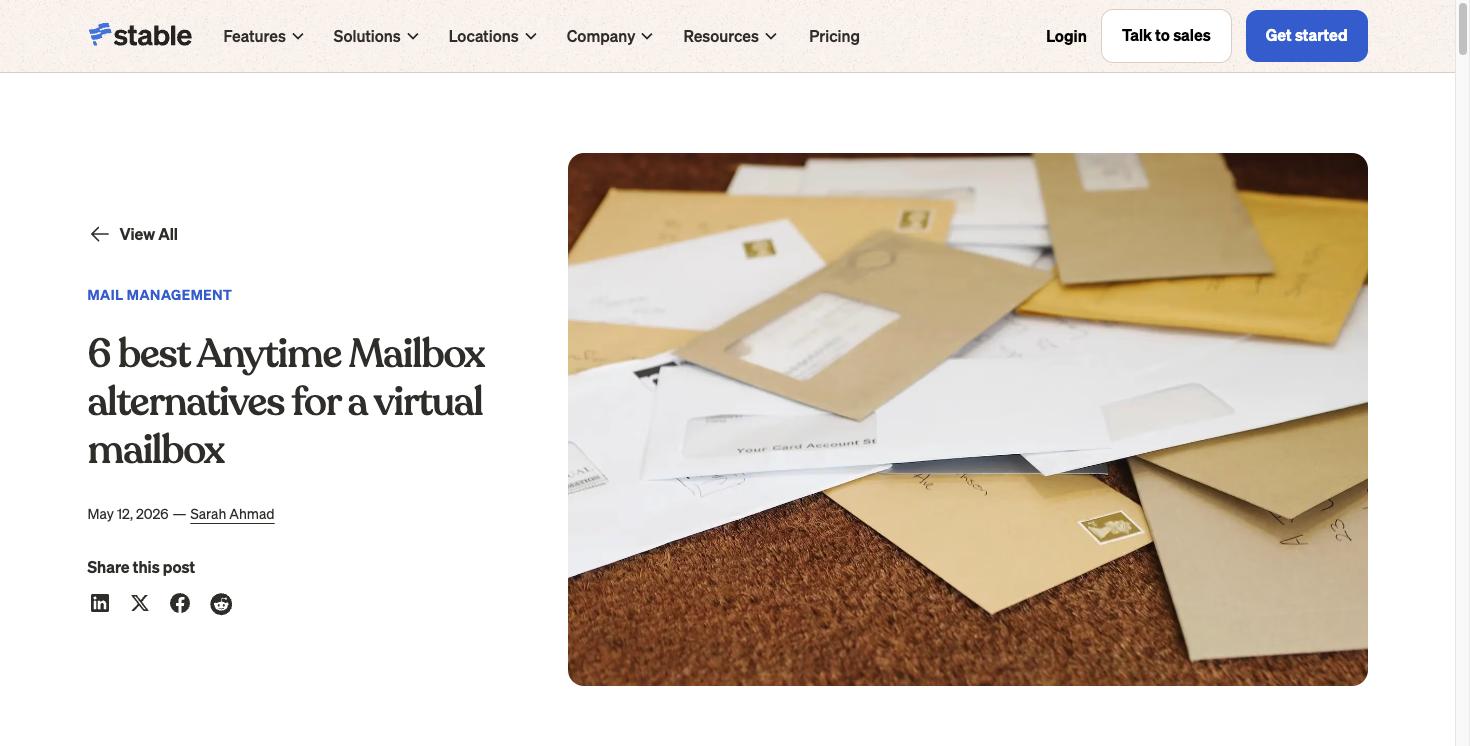
1. Stable: MOFU topics that match how customers search
Stable is a virtual address and mail management service. Its customers face different rules depending on where they operate, which created a large set of specific, high-intent topics.
We built the program around MOFU formats tied directly to the product:
- "Best X software" listicles for the category Stable belongs in
- Alternatives listicles for Stable's competitors
- In-depth how-to articles on the problems Stable solves
- Location-based "need to know" articles, like mail forwarding rules by state
The result: Organic traffic grew 509% and traffic value grew 451% in six months. Because the topics mapped to real buying questions, the traffic came from people already evaluating solutions.
2. Workvivo: Refreshes plus product-led MOFU content
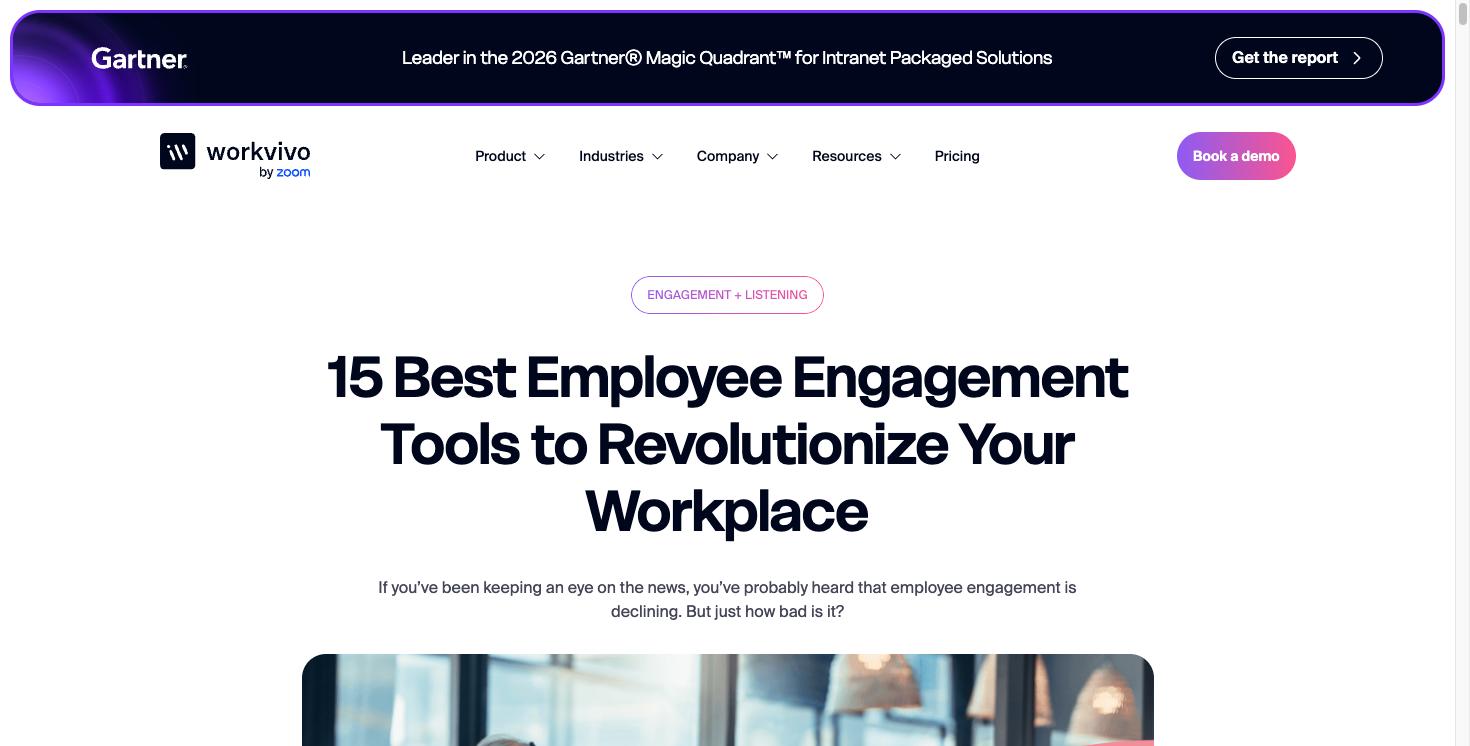
Workvivo is an employee experience platform. When we started, most of its traffic came from branded searches, and its non-brand educational content was decaying.
We ran two tracks at once: refreshing the highest-value decaying pages and filling the middle of the funnel with net-new content. The MOFU work centered on three formats:
- Listicles that answered common buyer problems and positioned Workvivo's features as the fit
- How-to guides that showed how to reach a specific goal using the platform
- Product-led articles that explained features in the context of real problems
The result: Organic traffic grew 78% and traffic value grew 90% in 12 months.
3. Ten Speed: Listicles built for buyers and AI
We apply the same MOFU playbook to our own site. Our agency listicles, like best B2B SEO agencies and best AEO agencies, are built to help buyers compare and to give AI answers clean, structured details:
- A disclosed, scored methodology. We score every agency on the same stated criteria and say upfront that we ranked ourselves.
- The same fields in every entry. Value props, who it's best for, results, and pricing, in the same order.
- Real screenshots. Each agency's actual homepage, not stock images.
- A quick comparison table near the top for anyone who wants the answer in one glance.
That structure tells buyers and AI models what each option is and who it fits.

Want a roadmap like this for your own funnel? Our organic growth strategy ties every topic back to pipeline.
How to personalize middle of the funnel content
Personalized MOFU content converts better because buyers can see themselves in it. Generic content tells a buyer you haven't thought about their situation.
Focus on four factors:
- Industry. A healthcare buyer wants a healthcare case study, not a generic one.
- Role. Technical evaluators want architecture and integration details. Business stakeholders want cost, timeline, and ROI.
- Company size. Enterprise, mid-market, and small business buyers have different budgets, timelines, and approval paths. If you're moving into larger accounts, see our enterprise SaaS SEO guide.
- Past engagement. Build on what a lead already read instead of starting over.
Start small. Build core content for your main segments, then adapt specific sections, examples, and case studies by industry or role. Progressive profiling forms help too: ask for an email first, then industry or role on later downloads.
Personalization only works if you know who you're writing for. Start with a clear content map that ties each MOFU asset to a segment and a buyer question.
Why most ideal customer profile (ICP) research falls short, and how sales calls and customer conversations make content more specific.
How to measure middle of the funnel marketing
Measure MOFU by whether buyers move closer to a decision, not by how many people saw the content. Page views and email opens don't tell you that. Track three groups of metrics instead.
| Metric group | What to track | What it tells you |
|---|---|---|
| Engagement depth | Engaged time, return visits during evaluation, paths between MOFU pages | Whether buyers are seriously evaluating, not just skimming |
| Progression | Marketing qualified lead (MQL) to sales qualified lead (SQL) rate after MOFU engagement, sales cycle length, close rate for leads who engaged vs. didn't | Whether MOFU content moves deals forward |
| AI visibility | Share of voice on evaluation-stage prompts, citations of your MOFU pages, LLM referral traffic and conversions | Whether AI answers put you on the shortlist |
The AI visibility group is the newest, and it's the one most teams aren't tracking yet. Start by picking the 20 to 50 "best X for Y" and "X vs. Y" prompts your buyers are most likely to ask. Then track how often you're mentioned and which of your pages get cited. A prompt tracking tool makes this repeatable.
LLM referral traffic often converts well even when the session count is small, because the buyer arrives already partway through an evaluation. Track it as its own channel in your analytics so your reports don't lump it in with direct.
For a fuller breakdown, see our guides to content marketing metrics and content attribution.

Nate and Kevin cover why traditional organic measurement falls short and introduce the C.L.E.A.R. framework.
Common middle of the funnel mistakes
Most MOFU programs stall for one of four reasons.
1. Pushing too hard, too soon
MOFU buyers want to evaluate on their own before they talk to sales. A "Talk to sales today!" CTA on a comparison guide creates pressure they're not ready for. Use next-step CTAs that match the stage, like "See the implementation guide" or "Read the case study," and let buyers set the pace.
2. Treating every buyer the same
Sending the same content to everyone ignores how differently roles and industries evaluate. Technical evaluators get business cases they skip, and executives get specs they never read. Segment by industry, role, and company size, and build separate paths for each.
3. Staying at the surface
Content that only restates the problem leaves a buyer comparing solutions with nothing to compare. MOFU buyers need implementation details, integration requirements, real pricing ranges, and honest trade-offs. Without them, buyers can't tell options apart, and neither can AI.
4. Locking the best answers behind a gate
Gated PDFs and unrecorded webinars are invisible to AI search. If your best comparison or ROI breakdown sits behind a form, AI will cite a competitor's open page instead. Keep the core answer on an indexable page and gate the deeper extras, like templates or full reports.
Nate and Derek cover the buyer journey and CTA mistakes that keep organic traffic from converting.
Build a middle of the funnel that gets you on the shortlist
MOFU content decides whether you make the shortlist, and more of that shortlist now comes from AI answers. The teams that win build specific, well-structured content for each evaluation question and keep it fresh.
Ten Speed is a B2B AEO and SEO agency that drives organic growth. We build MOFU programs that rank in Google, get cited in AI answers, and move buyers toward pipeline.
Get a MOFU plan built for search and AI
Book a call and we'll put together a proposal with your biggest opportunities.
Get a custom proposalFrequently asked questions
What is middle of the funnel marketing?
Middle of the funnel marketing is content that helps buyers who know their problem compare solutions and build a shortlist. It sits between awareness content and decision content, and its goal is to earn consideration.
What are examples of middle of the funnel content?
Common MOFU content includes comparison guides, "best X for Y" listicles, case studies, implementation guides, ROI calculators, webinars, product demos, and email nurture sequences. The best choice depends on the evaluation questions your buyers ask most.
How do you get MOFU content cited in AI answers?
Answer the question in the first sentence of each section, use the same plain category language buyers use, state who each option is best for, and put comparisons in tables. Keep the page indexed, sourced, and refreshed often.
Should MOFU content mention competitors?
Yes, when it helps the buyer decide. Compare on objective criteria like pricing model, setup time, and best fit, and be honest about where other options are stronger. Buyers trust balanced comparisons more than one-sided ones.
How long does MOFU marketing take to show results?
Engagement usually moves first, then lead progression, then pipeline. Results also depend on your site's existing authority. Stable saw 509% organic traffic growth within six months, helped by topics that matched how its buyers already searched.
How can a small team create MOFU content?
Start with three pieces for your primary buyer: one comparison guide, one detailed case study, and one implementation guide. Expand into listicles and tools once those are working.
How is B2B MOFU marketing different from B2C?
B2B MOFU content has to work for a buying committee with different priorities over a longer evaluation. B2C MOFU usually targets one decision-maker with a shorter, more emotional decision.
